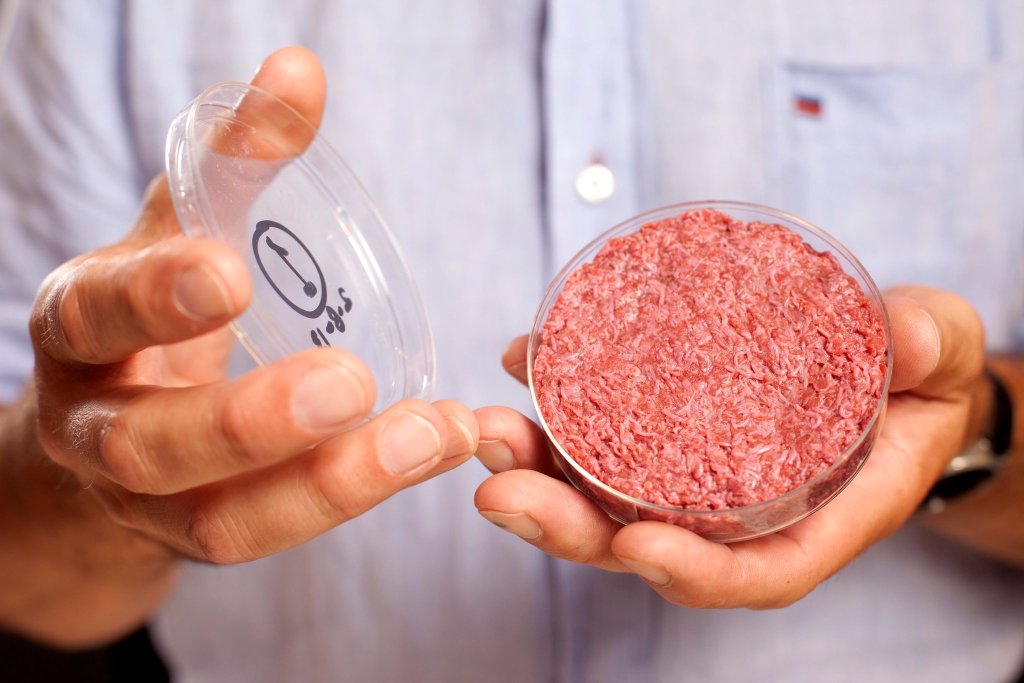
A fifteen year plant-based journey of TOP:
Over 15 years ago, we embarked on a journey to develop innovative meat substitutes and plant-based products. Our focus was specifically directed towards creating textures using extruders and other technologies. We firmly believed that the key to successful adoption of plant-based alternatives lay in replicating the texture and flavor profiles of meat.
Through years of dedicated work and scientific research, we established three remarkable companies that have made significant contributions to the field. In recent years, however, we have consciously chosen to be cautious about investing in cultured meat, and in this article we want to take a closer look at the reasons behind this strategic choice.
My bold statement in the past five years has been that:“at best, cultured meat companies will become good ingredient suppliers, producing flavorful fat cells or meat cells. Consequently, these companies may become ingredient suppliers to supply manufacturers producing plant-based products with precision fermented ingredients.”
In the future, cultured meat products will essentially be hybrid products combining plant-based meat substitutes with 10-30% animal cells produced through precision fermentation.
The four most important arguments supporting my strong statement have always been:
- In a cultured meat reactor, you create individual cells without structure. Therefore, carriers are required. These technologies have already been invented in the plant-based world.
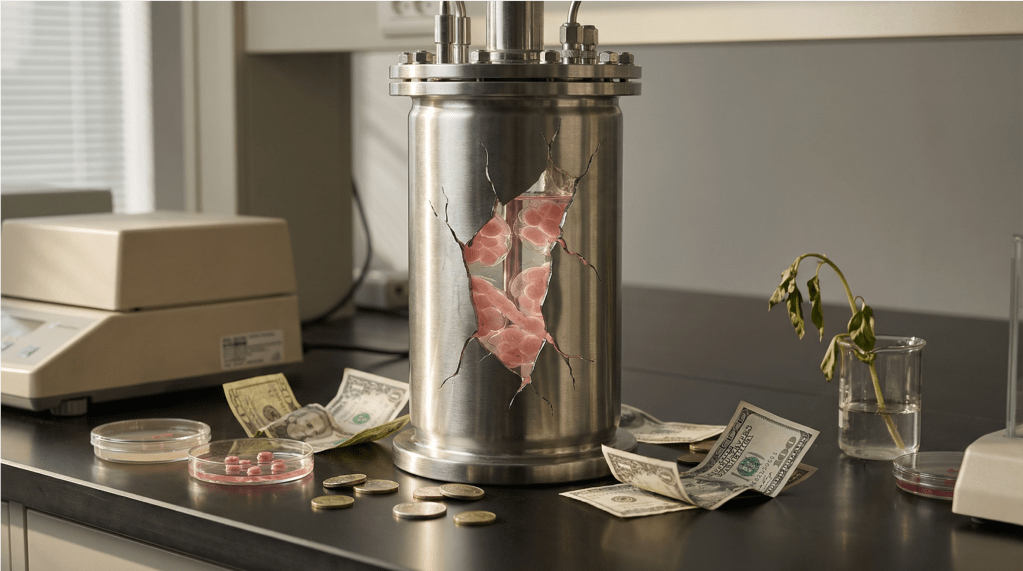
- The costs associated with these cells are enormous, particularly higher than those of, for example, algae. I don’t believe these proteins (in their dry form) will become cheaper than, say, €20 per kg, whereas a reasonable target should be below €7-10 per kg.
- Over the coming years, consumers will become increasingly accustomed to the taste of plant-based alternatives. I anticipate that in the long run, the latent demand for cultured meat will decrease.
- The life cycle assessments (LCAs) of cultured meat (which doesn’t even exist yet) will be less favorable than the promises often presented in popular media or the startup world.
Be careful thus with the cultured meat promise:
Argument 1: The Importance of Structure in Plant-Based Products:
The success of plant-based meat substitutes heavily relies on the ability to recreate the desirable textures found in traditional animal-based products. We recognized early on that consumers not only seek the flavors associated with meat but also crave the familiar mouthfeel and texture. By leveraging extruder technology, we have made significant strides in replicating these textures, providing consumers with a compelling plant-based alternative. This focus on structure sets us apart from the cultured meat industry, as we firmly believe that textures play a pivotal role in consumer acceptance.
Argument 2: Strategic Decision: The Limitations of Cultured Meat:
In the past five years, we deliberately chose not to pursue cultured meat as a core area of research and development at TOP. This decision stems from several key considerations that highlight the limitations and challenges associated with cultured meat production.
Firstly, cultured meat reactors produce individual cells without inherent structure. To create structurally coherent products, additional carriers or scaffolding techniques are required. Interestingly, these technologies have already been developed within the plant-based sector, providing a viable solution to the structural challenges faced by cultured meat production.
Secondly, the cost of producing cultured meat cells remains a significant obstacle. Comparatively, the production costs of proteins derived from cultured cells, such as fat cells or meat cells, are higher than those of alternative sources like algae. Achieving cost competitiveness is crucial for the widespread adoption of plant-based alternatives, and the current cost projections for cultured meat proteins are not aligned with this goal.
Furthermore, as the plant-based industry continues to advance, consumers are becoming more accustomed to the taste and quality of plant-based products. Over time, this increasing familiarity and preference for plant-based alternatives could reduce the latent demand for cultured meat.
Argument 3: Future Outlook: Hybrid Products and Precision Fermentation:
Looking ahead, we envision a future where cultured meat products will emerge in hybrid solutions too, combining plant-based meat substitutes with a small percentage (around 10-30%) of animal cells derived through precision fermentation. This approach holds potential for achieving a balance between flavor, texture, and sustainability. By harnessing the power of precision fermentation, we can produce animal cells in a controlled environment, ensuring efficient resource utilization and reducing the environmental footprint.
Summary and Conclusion:
In conclusion, our extensive experience and research in the plant-based industry have led us to make a deliberate choice to focus on creating plant-based meat substitutes rather than pursuing cultured meat. The ability to replicate textures and flavors has been a driving force in the widespread acceptance of plant-based alternatives. Moreover, the limitations and challenges associated with cultured meat, including the need for structural development, high production costs, and changing consumer preferences, have influenced our strategic decision.
We anticipate that the future of cultured meat lies in the realm of hybrid products, combining plant-based ingredients with animal cells produced through precision fermentation. This approach holds promise for delivering products that align with consumer demands for taste, texture, and sustainability.
By leveraging our expertise in plant-based product development and the development of new structuring technologies that can be applied at industrial throughputs, we aim to continue contributing to the advancement of sustainable and delicious alternatives to traditional meat consumption.

 Protein Trends