With Thanksgiving approaching, Americans are set to consume 46 million turkeys. But imagine a future where your turkey is grown in a bioreactor rather than on a farm. Science fiction? Not anymore.
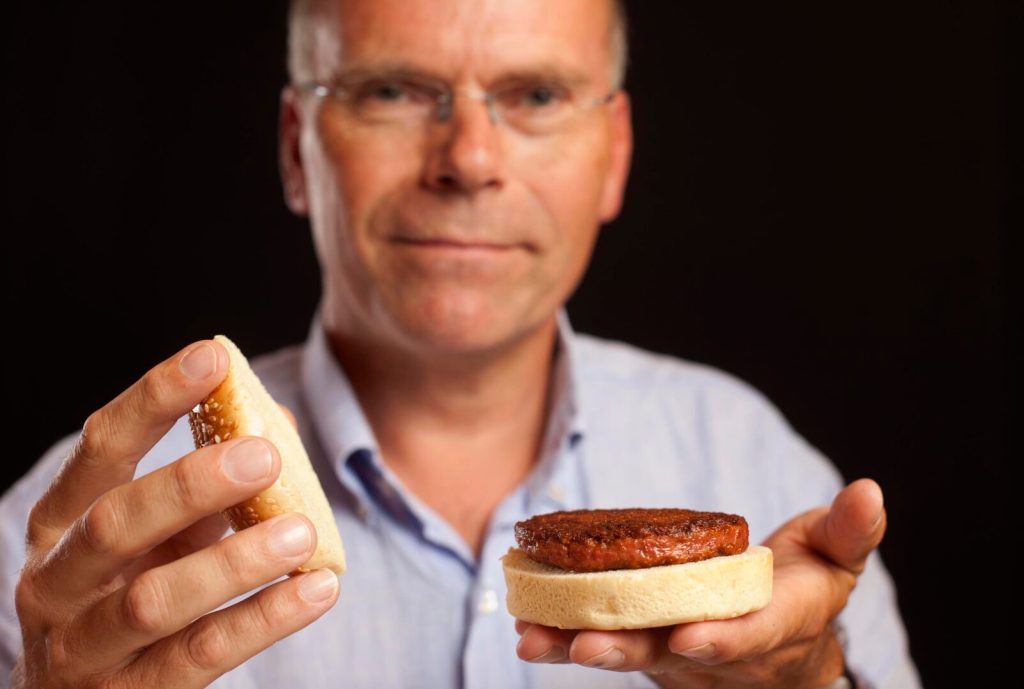
In 2013, Mark Post unveiled the world’s first cultivated burger, grown from cow stem cells. At $330,000, it marked the start of a revolution in meat production. Since then, the cultivated meat industry has grown exponentially, fueled by innovation and a global push to make food systems more sustainable.
A Brief History of Cultivated Meat
- 1931: Winston Churchill envisioned lab-grown meat in an article, predicting it could eliminate inefficiencies in traditional farming.
- 1990s: Dutch researcher Willem Van Eelen developed early patents for cultured meat.
- 2002: NASA-funded researchers grew fish tissue as a potential protein source for astronauts.
The Cultivated Meat Boom
By the 2010s, the industry gained momentum:
- 2013: Post debuted the $330,000 burger, funded by Google’s Sergey Brin.
- 2014: Memphis Meats (now Upside Foods) became the first cultivated meat company.
- 2018: Aleph Farms revealed the first cultivated steak, later expanding into 3D-printed ribeye.
By 2022, there were over 150 companies globally, backed by $2.6 billion in investments.
Tackling Cost and Scalability
Early cultivated meat relied on expensive growth serums. Today, companies like Multus Biotechnology and Upside Foods have developed animal-free alternatives, drastically reducing costs. For example:
- 2021: Believer Meats produced chicken for $7.70 per pound.
- 2023: Pluri Inc.’s new technology boosted cell production by over 700%.
Scaling production facilities has also been key. Mosa Meat, for instance, built a 77,000-square-foot facility to advance cultivated beef production.
Regulatory Milestones
Regulatory approval is a significant hurdle:
- 2020: Singapore approved cultivated chicken from Eat Just, a world first.
- 2023: The USDA approved cultivated chicken from GOOD Meat and Upside Foods, available in select U.S. restaurants.
- 2024: Aleph Farms’ cultivated beef was approved in Israel, and Meatable gained EU approval for public tastings.
What’s Next?
High-end products like cultivated foie gras may hit the market first, with mainstream adoption likely 20–30 years away. As the technology advances, cultivated meat is poised to reshape how we produce and consume food.




 Protein Trends
Leave a comment