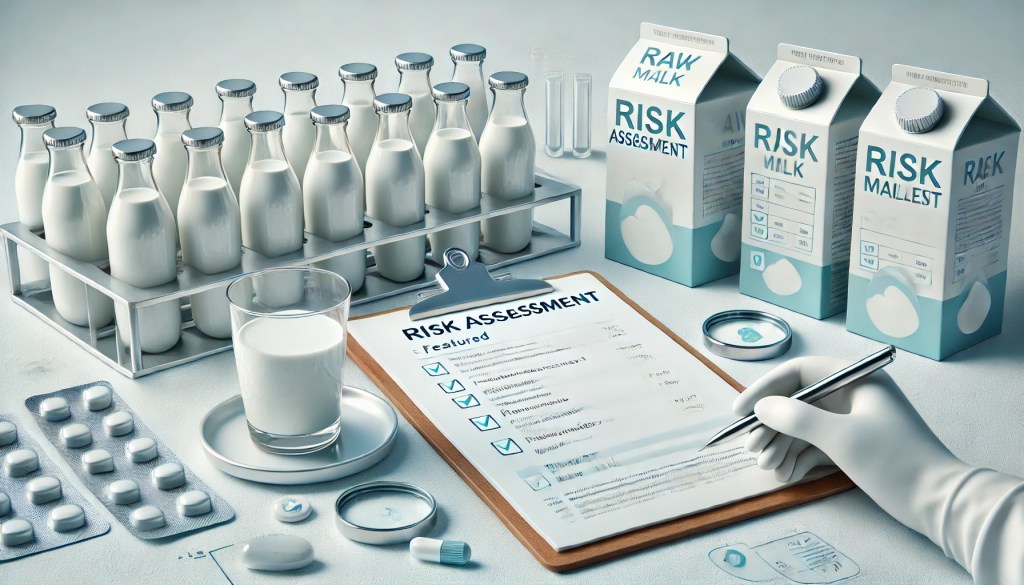
The Illusion of Safety Through Testing
When thinking about food safety, the first thought often is: “Send the product to a lab for testing.” But did you know that testing alone is not enough? Testing is often seen as the standard solution because it delivers quick results and is easy to perform. Yet, it provides only a snapshot and not a structural solution to food safety issues. It creates an illusion of safety and does not solve the actual problem. What is truly needed is thorough risk assessment and control over processes. While this may sound complex, it is essentially about understanding and addressing the risks.
Testing vs. Process Control
An experienced food microbiologist recently stated that testing does not guarantee food safety. It merely provides a false sense of security. Imagine this: drinking raw milk is microbiologically at least a million times riskier than drinking water with a slight bacterial contamination. According to a WHO report, raw milk globally poses a significant risk of diseases like salmonella and campylobacter, while slightly contaminated drinking water is usually better regulated and monitored. Yet people are often more afraid of the latter because they trust testing.
The issue is that people often believe testing solves everything. However, food safety primarily depends on understanding the processes and risks. Take milk pasteurization as an example. It involves heating milk for 15 seconds at 72 degrees Celsius. In reality, even lower temperatures are often sufficient, but we stick to old standards. Why? Because that’s what we’ve agreed upon, not because it’s always necessary.
The Decline in Risk Assessment Expertise
Another issue is the diminishing knowledge of risk assessment. Many students in colleges and universities are taught primarily how to test but not how to analyze risks. One example is the lack of understanding of how cross-contamination can occur during production and what steps can be taken in a process to minimize that risk. Such oversights can lead to significant incidents that could have been prevented with proper risk assessment. This is partly due to a lack of good educators and a focus on quick fixes.
Additionally, the immense price pressure in the food chain plays a role. Companies aim to do everything as cheaply as possible, which often means food safety is not a top priority. Many managers also tend to think in terms of protocols rather than risks, further increasing the likelihood of major incidents.
Major Incidents Are Only a Matter of Time
The question is not if a major incident will happen, but when. Prevention is often much cheaper than the costs of a crisis. A good example of this is the timely identification and elimination of cross-contamination risks in a food production facility. By investing in process improvements, companies can save millions that would otherwise be spent on recalls, legal fees, and reputational damage. Think, for example, of the fipronil crisis in the Netherlands. There was no major public health risk, but the sector faced enormous losses.
Moreover, Europe wastes billions of euros annually on regulations with little impact, such as the ban on animal meal. These measures are implemented without adding real value to public health.
How to Improve Food Safety
To enhance food safety, we need to change our approach:
- Better education. Students must learn how to assess risks, not just how to send samples to a lab.
- Focus on processes. Ensure farmers and businesses understand their processes well. A well-controlled process guarantees safer food.
- Awareness. Companies need to take food safety seriously, despite price pressures.
- Smarter regulations. Create legislation based on actual risks, not on old traditions or past incidents.
Collaborating for Better Food Safety
The food chain needs leaders who can make a difference. We need experts who identify problems and students who are well-trained in risk assessment. Let’s move beyond illusions of safety and take food safety seriously.
What do you think? How can we work together to ensure better food safety? Consider actions such as attending risk assessment training, organizing audits within companies, or promoting better education and awareness campaigns about process control. Your ideas and experiences are welcome! Share your thoughts below.


 Protein Trends
Leave a comment