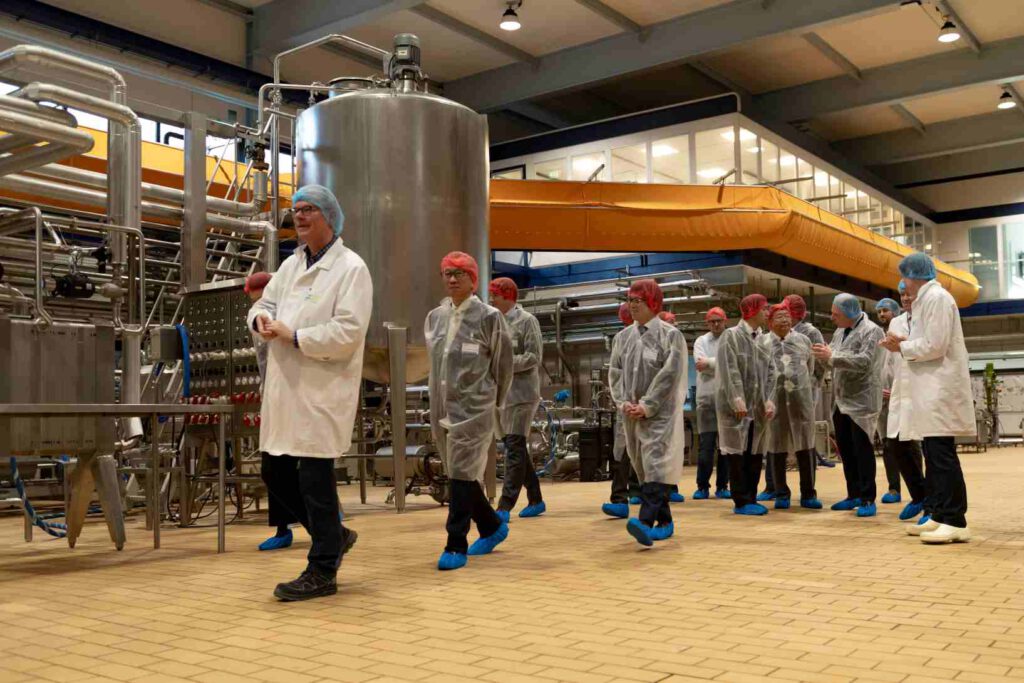
In Ede, the Netherlands, a symbolic shift is underway. Once home to dairy innovation, the town is now laying the foundation for a future where proteins are brewed—rather than milked—from vats of engineered microbes. This month marks the announcement of the Biotechnology Fermentation Factory (BFF), a state-of-the-art, open-access pilot facility designed to scale up the production of animal-identical proteins through precision fermentation. It’s a bold step for a sector that promises to reshape the global protein landscape.
From Dairy Heritage to Microbial Protein Innovation
The origins of BFF lie in the long-standing dairy expertise of NIZO, the Dutch Institute for Dairy Research. In the 1950s, Dutch farmers cooperated to build shared research capacity at NIZO to innovate in butter and cheese. Today, a new generation of protein pioneers is following a similar path—this time focusing on milk proteins without the cow.
Precision fermentation allows genetically programmed microorganisms (yeasts, fungi, or bacteria) to convert plant-based sugars into high-value proteins like whey and casein. These proteins are molecularly identical to those found in milk but produced without any animals involved. Companies such as Vivici, FrieslandCampina, and Those Vegan Cowboys are among the leaders developing these novel ingredients.
The Promise of Precision-Fermented Whey
One of the most promising ingredients currently being developed is β-lactoglobulin (BLG), the main protein in whey. It’s widely used in sports nutrition, baked goods, and functional dairy alternatives. Vivici, based in Oegstgeest near Leiden, is taking the lead in commercializing precision-fermented BLG. Backed by €33 million in funding and shareholders like DSM Firmenich and Fonterra, Vivici has already secured regulatory approval for its ingredient—Vivitein—in the United States and is producing it on a limited scale for an initial client.
Vivici’s protein is cream-colored, tasteless, lactose-free, and nutritionally complete. Its low viscosity and excellent solubility make it a versatile base for sports drinks, recovery shakes, and infant formula. CEO Stephan van Sint Fiet sees sports and medical nutrition as the logical first markets, but believes the real breakthrough will come when such ingredients are adopted at scale in desserts, bakery products, and plant-based dairy alternatives.
An external lifecycle assessment suggests that Vivici’s fermentation process could reduce greenhouse gas emissions by up to 70% compared to conventional whey production. And because the process requires only plant-based feedstocks and green electricity, production could theoretically be located anywhere in the world.
Scaling from Flask to Factory
Despite the progress, the sector faces its biggest challenge yet: scaling production. While pharmaceutical-grade fermentation is well established (e.g., for insulin), food-grade fermentation at scale must meet stricter cost targets and safety standards. This is where the BFF facility in Ede comes in. With €12.5 million from the Dutch National Growth Fund and additional funding from the Gelderland regional government, the BFF offers a shared testbed for startups to pilot their production processes in bioreactors ranging from 1 to 10,000 liters.
This kind of infrastructure is prohibitively expensive for individual start-ups, but by pooling resources—just as dairy cooperatives did decades ago—Dutch innovators aim to accelerate commercial readiness. According to Marcel Oogink, director of the new scale-up facility, the BFF will be a hub where early-stage companies can fine-tune their fermentation conditions, drying processes, and product formulations for real-world applications. It will even support prototype development for final consumer products like shakes, powders, and bars.
A Market in Transition, Not Disruption
While some public narratives frame precision fermentation as a threat to animal agriculture, most startups—including Vivici—stress complementarity over confrontation. The goal isn’t to replace livestock, but to meet the growing global demand for protein sustainably. “Let them eat beans” might sound good on paper, says Van Sint Fiet, but consumer behavior changes slowly. Instead, the challenge is to provide more sustainable versions of familiar animal proteins.
The market potential is enormous. Vivici estimates a €5 billion global market for precision-fermented whey alone, representing over three million tons of protein annually. But the road to that future is long. Regulatory hurdles, consumer acceptance, and scale-up investments are all significant barriers. Investor enthusiasm has cooled since the protein fermentation funding peak in 2021, and many start-ups now face a more skeptical market.
Still, serious long-term investors remain. As one panelist at this year’s F&A Next conference in Wageningen remarked: “Give it three more years. It’s coming.” The Good Food Institute already lists Vivici among the world’s most advanced players in fermentation-based protein scaling.
The Future Is Fermenting
With the launch of the BFF in Ede and the quiet determination of companies like Vivici, the Netherlands is positioning itself as a global fermentation hub. If successful, this new generation of protein producers may reshape not only the food industry but the agricultural economy that supports it.
As Van Sint Fiet puts it, “Farmers shouldn’t see us as competition, but as partners. We still need agriculture for our feedstocks.” In this emerging chapter of the protein transition, tanks and tractors might just share the same goal: feeding the world—smarter.

 Protein Trends
Leave a comment