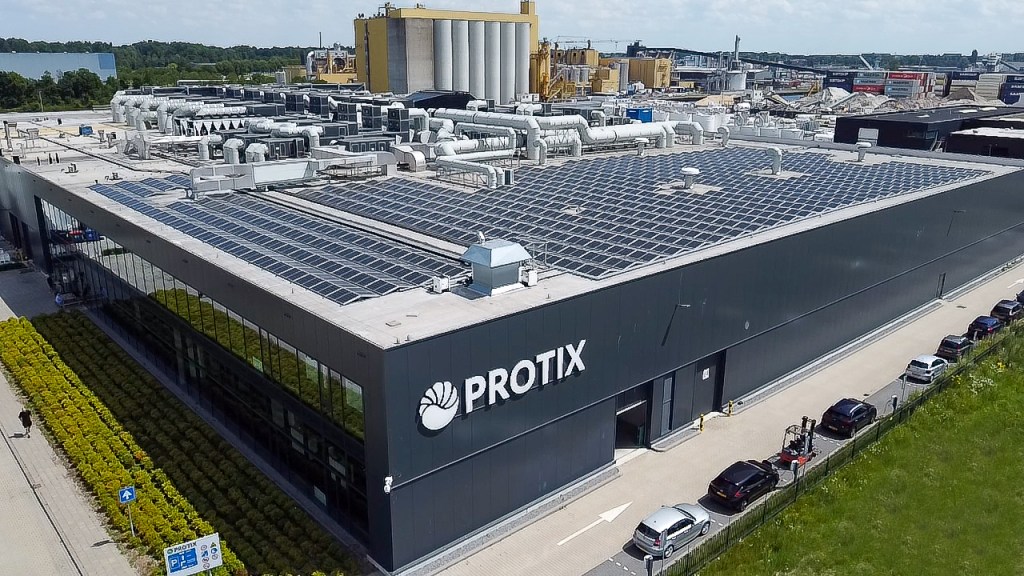
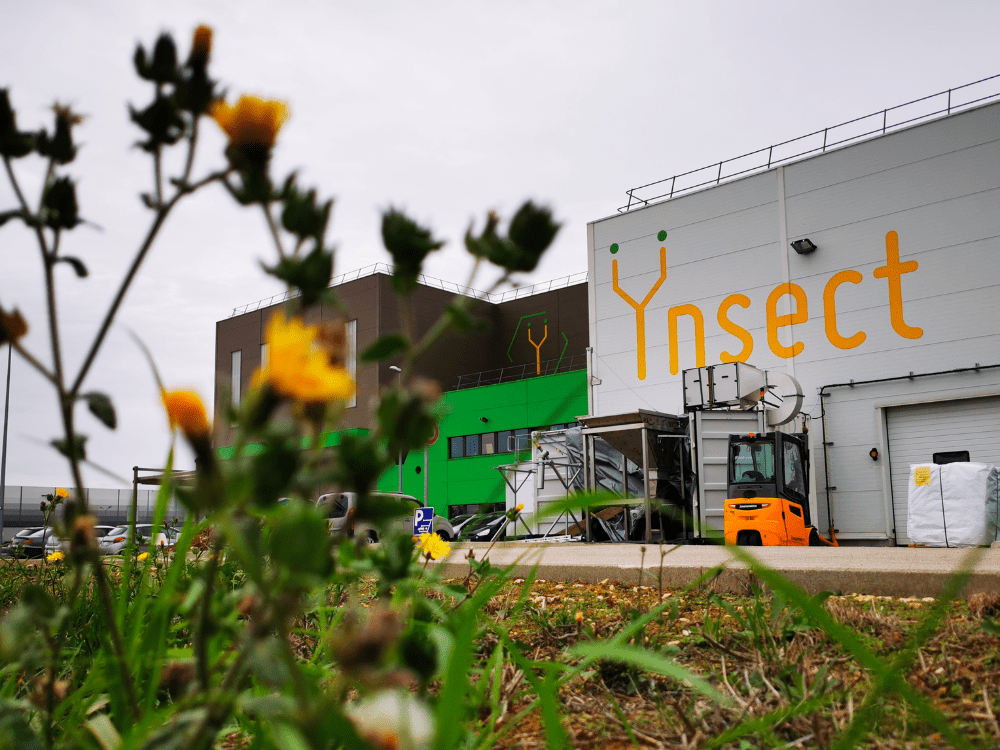
The bankruptcy of Ynsect has cast a long shadow over Europe’s insect-protein sector. With Ynsect’s collapse still fresh, investors and policymakers are asking whether other high-profile players could face similar risks. One company that inevitably enters this discussion is Protix, the Netherlands-based producer of insect protein and lipids. A close reading of Protix’s 2024 annual report provides a factual basis to assess where the company stands—and where its vulnerabilities lie.
Scale, revenues, and operating performance
Protix reported revenues of €11.8 million in 2024, essentially flat compared with €11.7 million in 2023 . While top-line stability can be interpreted as resilience in a difficult market, it also underlines that Protix has not yet entered a rapid growth phase. Total operating income, including other operating income, reached €13.8 million in 2024, up from €12.1 million the year before, largely due to service income and royalties rather than core product sales .
On the cost side, the picture remains challenging. Total operating expenses amounted to €36.4 million, resulting in an operating loss of €22.5 million for the year . Employee expenses alone were €14.6 million, reflecting an average workforce of 150 full-time equivalents . Depreciation and amortisation increased sharply to €6.1 million, a sign of the capital-intensive nature of Protix’s production infrastructure.
In short, Protix remains firmly loss-making at the operating level.
Cash flow and liquidity position
Cash flow data reinforce this conclusion. Net cash used in operating activities was €16.4 million in 2024, an improvement over the €21.1 million outflow in 2023 but still substantial . After investing activities and financing flows, Protix ended 2024 with €19.9 million in cash and cash equivalents, down from €41.3 million a year earlier .
The balance sheet shows total assets of €50.1 million, with equity of €39.3 million and total liabilities of €10.8 millionat year-end 2024 . Compared with Ynsect—whose balance sheet was heavily burdened by massive industrial investments—Protix’s asset base is far smaller. However, its shrinking cash position highlights an ongoing dependence on external financing.
Explicit going-concern risk
One of the most striking elements of the annual report is the auditor’s emphasis on material uncertainty related to going concern. The auditor explicitly notes that Protix has a history of negative operating cash flows and currently operates only one production plant, in Bergen op Zoom . According to both management and the auditor, additional financing beyond what is already secured will be required to fund operations and growth.
Management acknowledges that successful execution of the growth strategy depends on securing further debt and/or equity, obtaining permits, building facilities with partners, and increasing production capacity . This language is unusually explicit for a scale-up and places Protix in a category where continuity is viable—but not guaranteed.
Funding strategy and restructuring
After year-end, Protix implemented a revised growth strategy supported by shareholders and boards, including a considerable workforce reduction, primarily in overhead functions . In August 2025, the company drew €19 millionfrom a convertible loan agreement with existing shareholders, with a second tranche conditional on operational milestones. The loan converts to equity by the end of 2025 or earlier, or carries a steep 15% interest rate if repaid in cash .
This financing structure suggests two things. First, existing shareholders remain willing to support the company. Second, that support comes at a cost, underscoring the perceived risk profile of the business.
Market exposure and customer concentration
Protix operates in a single reportable segment: insect protein and lipids for animal feed and consumption. In 2024, two customers accounted for more than 10% of total revenue, together representing €3.1 million in sales, down from four large customers in 2023 . While reduced concentration can be positive, the absolute revenue level remains modest.
Geographically, revenue is spread across Germany, the Netherlands, the Czech Republic, the UK, and the rest of the world, with no single market dominating . This diversification mitigates some risk but does not change the underlying scale issue.
Comparison with Ynsect: similarities and differences
Factually, Protix is not Ynsect. Ynsect invested hundreds of millions of euros in mega-factories long before demand was proven. Protix’s fixed assets—property, plant, and equipment—stood at €24.8 million at the end of 2024, an order of magnitude smaller . That alone reduces the risk of catastrophic overcapacity.
However, the similarities are equally important. Both companies operate in price-sensitive feed markets, both rely on sustainability narratives to support adoption, and both have yet to demonstrate operating cash-flow positivity. Protix’s own auditors explicitly state that its future depends on continued access to external funding .
Outlook: a narrow but real path forward
The annual report does not project profitability in the near term. Instead, it frames the future in terms of disciplined execution, revised growth assumptions, and tighter cost control. If Protix succeeds in aligning capacity expansion with secured demand—and if investors continue to provide capital—it can avoid the fate of Ynsect.
But the numbers leave little room for complacency. As of 2024, Protix remains a classic scale-up: technologically advanced, strategically relevant, but financially fragile. The risk of failure is not imminent, yet it is clearly acknowledged—by management and auditors alike—as part of the company’s reality.
In that sense, Protix’s future will be decided less by vision than by execution. The balance between growth, financing, and market uptake will determine whether it becomes a durable industrial player—or another cautionary tale in Europe’s alternative protein experiment.

 Protein Trends
Leave a comment