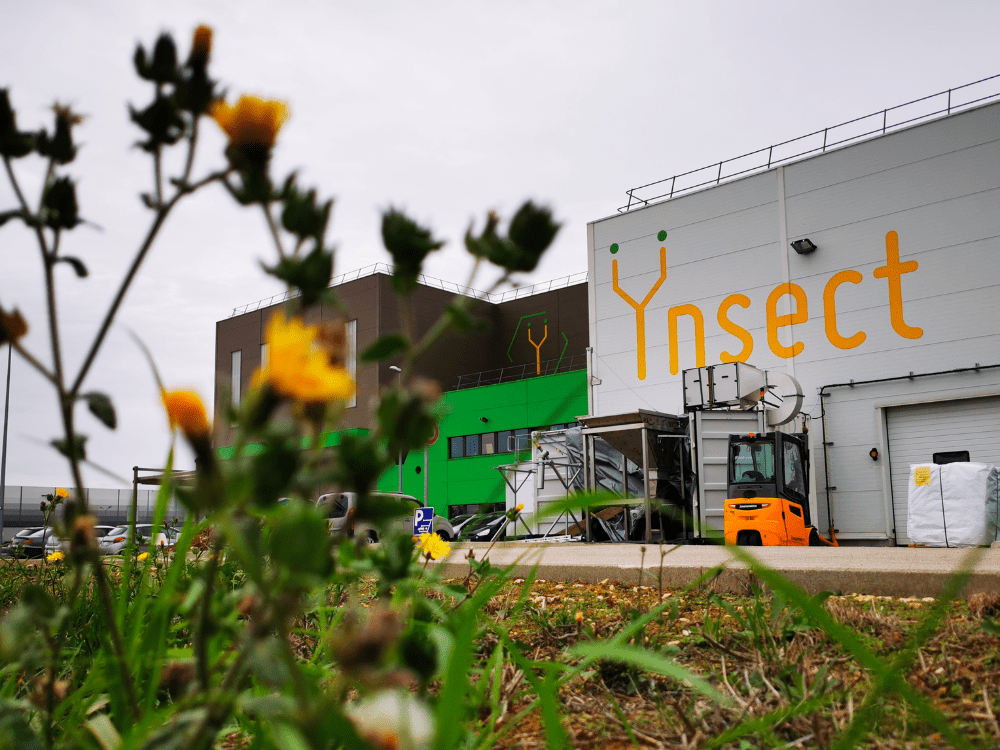
The collapse of Ynsect, once hailed as Europe’s flagship insect-protein start-up, marks one of the most expensive failures in the continent’s food-innovation history. After raising more than €500 million in public and private funding, the French company has been declared insolvent by a commercial court and placed into liquidation. What was promoted as a breakthrough for sustainable food and feed has ended as a cautionary tale about scale, costs, and market reality.
For years, Ynsect symbolized the promise of alternative proteins. Insects, particularly mealworms, were positioned as a climate-friendly substitute for soy and fishmeal—two commodities central to animal feed and aquaculture, but increasingly criticized for deforestation, overfishing, and geopolitical vulnerability. Less land use, lower emissions, and high feed-conversion efficiency formed a compelling story. Investors, policymakers, and sustainability advocates listened.
They invested heavily.
A sustainability darling with powerful backers
Founded in France, Ynsect attracted an extraordinary coalition of supporters. Impact funds, institutional investors, and the French state investment bank Bpifrance all backed the company. International attention followed. The FootPrint Coalition, a sustainability initiative linked to actor Robert Downey Jr., endorsed Ynsect, and the company even secured promotional visibility around the 2021 Super Bowl. In Europe, Ynsect became shorthand for “green industrial ambition.”
Yet beneath the optimism, a more prosaic problem persisted: profitability.
The price problem in animal feed
Ynsect’s core market was animal feed, a sector where margins are thin and price is paramount. Sustainability credentials rarely command a premium, especially when alternatives like soy meal or fishmeal remain cheaper and widely available. Despite technological advances, insect protein struggled to compete on cost.
This mismatch proved structural. No matter how compelling the environmental narrative, customers in feed markets could not—or would not—pay significantly more. The hoped-for sustainability premium failed to materialize, leaving Ynsect trapped between high production costs and a market unwilling to absorb them.
Strategic drift and loss of focus
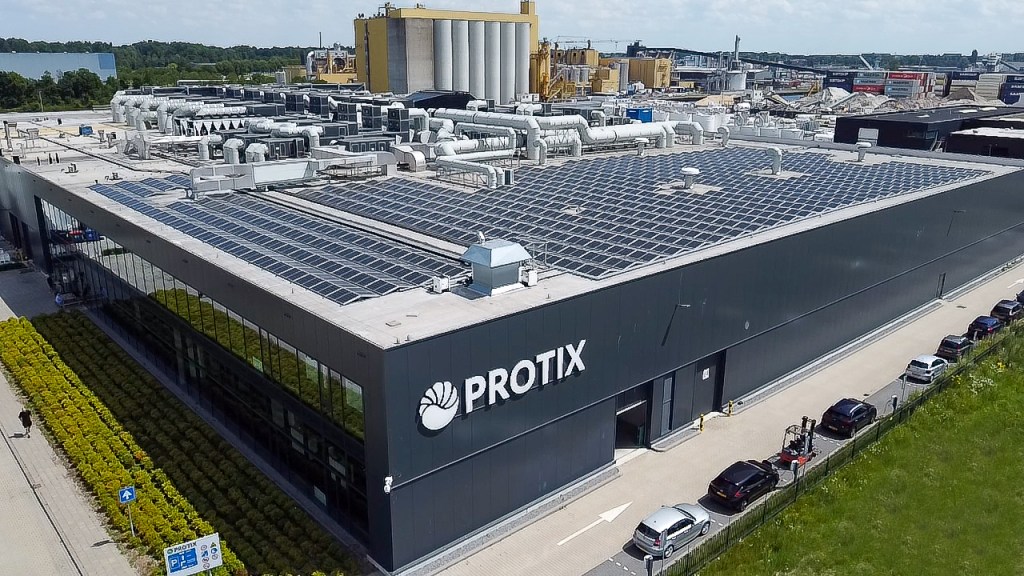
Compounding the cost issue was strategic uncertainty. Ynsect operated across several markets at once: feed for livestock, aquaculture, pet food, and—on a smaller scale—human food. In 2021, the company acquired the Dutch firm Protifarm, which specialized in insects for human consumption. The move raised eyebrows internally and externally.
At the time, then-CEO Antoine Hubert acknowledged that food for humans would likely account for only 10–15% of revenue in the medium term. Critics argued that the acquisition distracted management at a moment when focus and scale were essential. Instead of doubling down on one clearly viable market, Ynsect spread its resources across several.
Low revenues, mounting losses
Financial results reflected these tensions. In its best year, 2021, Ynsect’s main operating subsidiary reported revenues of €17.8 million. Public filings indicate that part of this figure came from internal transactions between group entities rather than external sales.
Costs, however, were on a different scale. By 2023, accumulated losses exceeded €79 million. Despite years of fundraising, the underlying business model never reached breakeven. Each new financing round postponed, rather than solved, the fundamental economic challenge.
Ÿnfarm: ambition turns into a burden
The breaking point came with Ÿnfarm, Ynsect’s mega-factory in northern France. Marketed as the largest insect-production facility in the world, it embodied the company’s belief in industrial scale as the path to competitiveness. Construction cost hundreds of millions of euros.
Crucially, the plant was built before demand and margins had been proven. It was an all-in bet. When sales failed to ramp up as expected, the factory’s fixed costs became a crushing burden. Instead of unlocking economies of scale, Ÿnfarm exposed the risks of scaling too early.
Leadership changes came too late
To oversee industrialization, Ynsect recruited Shankar Krishnamoorthy from energy group Engie. Later, leadership shifted again: founder Antoine Hubert stepped down as CEO, and Krishnamoorthy took the helm. Cost-cutting followed—layoffs, site closures, and divestments—but the measures were insufficient.
Ultimately, Ynsect entered judicial restructuring and was placed into liquidation. The final CEO, restructuring specialist Emmanuel Pinto, confirmed that remaining assets—primarily technology and know-how—will be sold, with hopes they can be reused elsewhere in Europe.
A broader European pattern?
For some observers, Ynsect’s downfall illustrates a recurring European problem. According to Professor Joe Haslam of IE Business School, Europe often excels at funding ambitious ideas but struggles with execution, timing, and industrial scaling. He points to parallels with other high-profile setbacks such as Northvolt, Volocopter, and Lilium—projects rich in vision, poor in commercial traction.
The critique is not anti-innovation, but anti-illusion: capital and subsidies cannot substitute for a market that works.
Not the end of insect protein
Importantly, Ynsect’s failure does not signal the end of insect protein in Europe. Other players are taking more cautious paths. Innovafeed, for example, has emphasized phased expansion, smaller facilities, and closer alignment with contracted demand. Slower growth and tighter financial discipline may prove more resilient.
Even Antoine Hubert appears to have drawn lessons from the experience. After leaving Ynsect, he founded Start Industrie, an initiative advocating more realistic industrial policy and better conditions for scaling technologies in Europe.
Lessons from a costly experiment
Ynsect’s story underscores a hard truth: sustainability alone is not a business model. Public subsidies, institutional backing, and powerful narratives can accelerate innovation, but they cannot override basic economics. If a product remains structurally more expensive than its alternatives, markets will resist—no matter how compelling the climate case.
The liquidation of Ynsect closes a chapter in Europe’s alternative-protein ambitions. It also offers a sobering lesson for policymakers and investors alike: green innovation requires not just vision and capital, but timing, focus, and above all, a path to competitiveness that survives outside the subsidy bubble.

 Protein Trends
Leave a comment